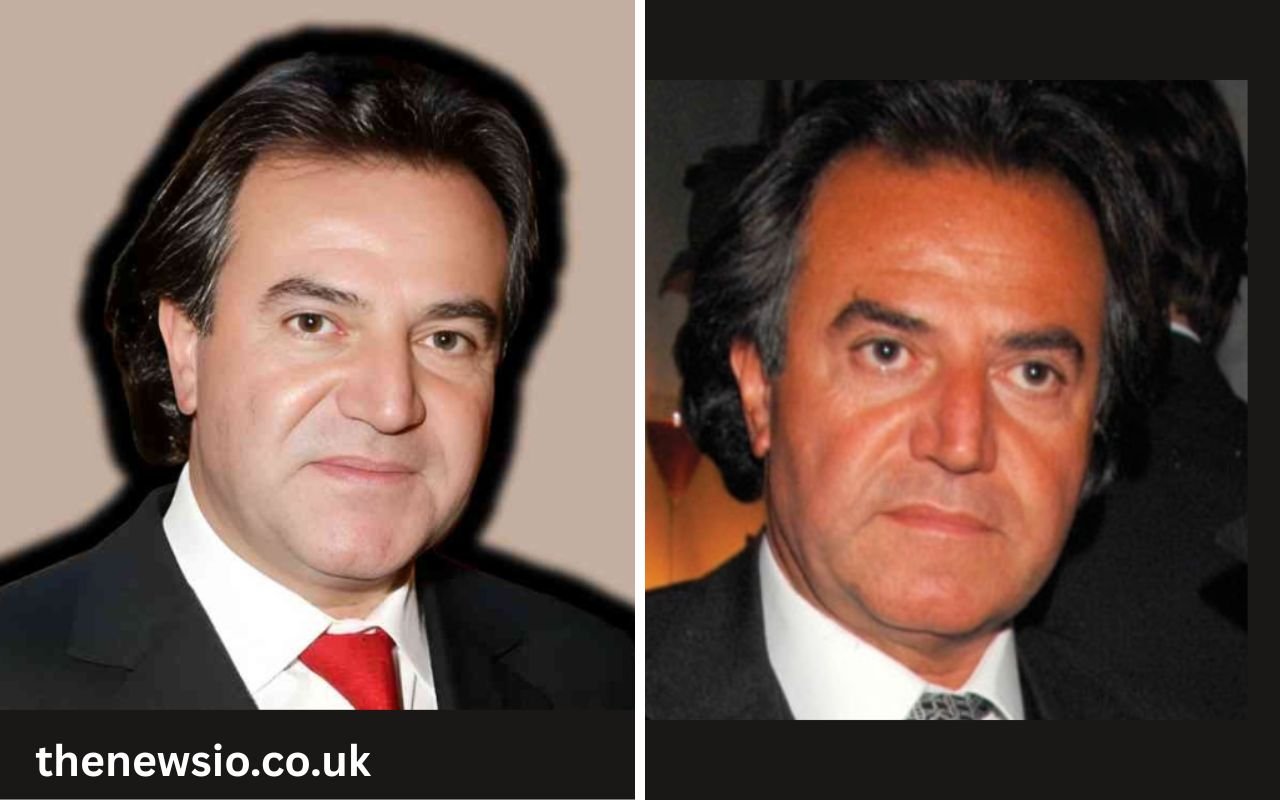
Early Life and Background of Simon Halabi
Simon Halabi, born Bassam Simon Halabi in 1958 in Syria, came from a wealthy and influential family background. His father was a successful industrialist with strong business interests, which gave Halabi early exposure to commerce, investment thinking, and large-scale enterprise. This environment shaped his ambition long before he entered the global property market.
From a young age, Halabi was surrounded by discussions of trade, assets, and expansion. His upbringing in a financially stable household allowed him to think beyond local opportunities and develop an international mindset. He eventually moved to Europe, where he began exploring long-term investment opportunities.
After relocating to the United Kingdom, he gradually adapted to London’s competitive financial environment. The city’s rapidly expanding property sector offered him the perfect stage to apply his ambitions, and he began forming the foundation of what would later become a major real estate empire.
Entry into the London Property Market
Simon Halabi entered the London property market during a period of strong economic expansion. The commercial real estate sector was attracting global investors, and Halabi quickly recognized the opportunity to build wealth through strategic acquisitions. His early investments focused on undervalued commercial buildings with long-term growth potential.
He began working through investment structures that allowed him to scale rapidly. By partnering with financial institutions and leveraging debt, Halabi was able to control assets far larger than his initial capital would normally allow. This aggressive strategy helped him establish credibility in London’s competitive property scene.
As his portfolio expanded, Halabi became more visible among property investors in the UK. His approach was bold and high-risk, but it also positioned him as a rising figure in a market that rewarded fast growth and large-scale acquisitions.
Rise of Simon Halabi in the Commercial Real Estate Sector
The rise of Simon Halabi was closely linked to the boom in London’s commercial property market during the 1990s and early 2000s. He focused on premium office spaces, central business district properties, and assets occupied by major multinational tenants. These investments increased both his influence and his financial leverage.
His reputation grew rapidly as he secured ownership of high-value properties across London. At one point, his portfolio included office buildings leased to global financial institutions, which significantly boosted his credibility in the investment world. He became associated with large-scale urban development projects that defined modern London.
During this phase, Halabi was seen as part of a new generation of property tycoons reshaping the UK skyline. His aggressive expansion strategy and willingness to take on large debt made him both admired and closely watched within financial circles.
Peak Wealth and Billionaire Status of Simon Halabi
At the height of his success, Simon Halabi reached billionaire status and was considered one of the wealthiest property developers in the United Kingdom. His estimated net worth reportedly peaked at around 4.3 billion US dollars in 2007, placing him on global rich lists.
His wealth was heavily tied to commercial real estate assets, including prime London properties and large development projects. He was linked to high-profile deals such as major skyscraper developments, which symbolized his position in the upper tier of global property investors.
During this period, Halabi’s lifestyle reflected his financial success. He owned luxury residences in the UK and France and maintained a presence in elite business circles. His name frequently appeared in financial media coverage discussing billionaire wealth and real estate expansion.
Major Investments and Business Expansion Strategy
Simon Halabi built his empire through aggressive investment in large-scale commercial real estate. His strategy relied heavily on acquiring high-value properties in central London and financing them through structured debt arrangements. This allowed him to control assets worth far more than his initial capital base.
One of his most notable associations was with The Shard development in London, where he held an early stake. Although he later exited the project, his involvement placed him at the center of one of the most iconic architectural developments in the city. His portfolio also included office towers and commercial complexes occupied by major corporations.
His business model was built on expansion, refinancing, and reinvestment. While this approach enabled rapid growth, it also created significant exposure to market fluctuations, particularly in the event of an economic downturn.
Financial Crisis and Collapse of His Empire
The global financial crisis of 2007–2009 marked a turning point in Simon Halabi’s career. As property values declined sharply, his highly leveraged portfolio came under severe pressure. The debt used to finance his acquisitions became increasingly difficult to service.
Several of his assets began losing value simultaneously, creating a financial imbalance across his portfolio. One of his business ventures, the Esporta gym chain, entered administration, adding further strain to his financial position. The downturn exposed vulnerabilities in his investment strategy.
By 2010, Halabi’s companies had defaulted on significant debts, and he was declared bankrupt in the High Court in London. This collapse marked the end of his billionaire status and resulted in the liquidation of much of his property empire.
Legal Issues and Public Controversies
Simon Halabi’s career has also been shaped by legal controversies that attracted significant media attention. One of the most widely reported issues was a 1998 conviction in France for sexual assault, which later resurfaced in public discourse during his financial decline.
In addition to this, he faced legal proceedings in the United Kingdom. In 2015, he was accused of racially aggravated assault following an incident in central London. However, after a trial in 2016, he was acquitted of the charges, clearing him legally in that case.
These legal matters contributed to a complex public image, combining business success, financial collapse, and personal controversy. They remain part of the broader narrative surrounding his life and career.
Personal Life and Family Experiences
Simon Halabi’s personal life has largely remained private, although certain details have become public over time. He is married to Urte Halabi, and the couple has two sons. Their family life has been marked by both success and tragedy.
One of the most significant personal events was the tragic drowning death of their young son, Samuel, in 2003 in France. This incident deeply affected the family and is often referenced in discussions about Halabi’s personal struggles.
Despite his public profile in business, Halabi has generally avoided media attention in his private life. He has maintained a low public presence, especially following his financial and legal difficulties.
Net Worth Decline and Current Position of Simon Halabi
Read More: Aliya Kapoor Biography, Lifestyle, Career, and Online Presence – A Complete Insight
At his peak, Simon Halabi’s net worth was estimated in the billions, making him one of the most prominent property magnates in the UK. However, the financial crisis led to a rapid and irreversible decline in his fortune.
Following bankruptcy, many of his assets were sold off to repay creditors. Iconic properties that were once part of his portfolio changed ownership, marking the dismantling of his empire. His financial influence in the property market disappeared almost entirely.
Today, Halabi is no longer active as a major real estate investor. His name is now primarily associated with discussions about financial risk, leveraged investment strategies, and the volatility of global property markets.
Legacy and Impact on the Property Industry
The legacy of Simon Halabi remains a subject of debate in financial and real estate circles. At his peak, he represented the ambition and rapid growth of London’s commercial property boom, helping shape parts of the city’s modern financial landscape.
At the same time, his downfall serves as a cautionary example of excessive leverage and market dependency. His collapse highlighted how quickly fortunes can change when property values decline and debt levels become unsustainable.
Today, Simon Halabi is remembered as a complex figure in UK property history, symbolizing both extraordinary success and dramatic financial failure.